Level guide · checked 2026-09-01
Nine Circles
Nine Circles is a Hard Demon created by Zobros. The original level uses ID 4284013, contains three user coins, and is best known for a fast wave section framed by the red-and-black visual language that later inspired a broad family of community levels. This guide separates stable identity facts from practice advice, maps the main route and all three coin detours, and explains the lineage without turning a changing list position into a permanent claim.

Outline
Safety note
Photosensitivity warning: Nine Circles is known for rapidly changing, high-contrast and strobing visual effects. Players who are sensitive to flashing images should avoid the level or follow appropriate medical guidance. Stop immediately if the visuals cause discomfort, dizziness, headache, eyestrain or disorientation.
Level reference
At a glance
| Fact | Reference |
|---|---|
| Creator | Zobros |
| Level ID | 4284013 |
| Difficulty | Hard Demon · 10 stars |
| Length | Long · about 1 minute 32 seconds |
| User coins | 3 |
| Password | 121214 |
| Song | Nine Circles by NIGHTkilla / Rukkus · Music ID 533927 |
| Common abbreviation | NC |
| Page format | Reference guide · no embedded Nine Circles build |
Guide section 01
Identify the original Nine Circles first
Nine Circles is a community level created by Zobros and listed as a Hard Demon worth 10 stars. The stable identifier for the original upload is level ID 4284013. That identity check matters because the name also describes a visual and gameplay lineage, and search results can mix the original with remakes, buffed copies, start-position copies, showcases, music uploads, and later levels that use the same style. Confirm the creator and level ID before treating a video, route, password, or completion claim as evidence about the original. The source record describes a Long level of about one minute and thirty-two seconds with three user coins. This page does not reproduce the level or promise a browser-play build. It is an independent reference that explains the entity, documented route, coin choices, practice method, and historical relationships. Dynamic likes, downloads, records, and list positions are deliberately omitted because those values can change after the checked date.
Guide section 02
Read the photosensitivity warning before the route
Nine Circles is widely associated with rapidly changing red-and-black contrast and strobing visual effects around its signature wave. That presentation can create a genuine accessibility problem, not merely an aesthetic preference. Players who are sensitive to flashing images should avoid the level or follow appropriate medical guidance. Anyone who notices discomfort, eyestrain, dizziness, headache, disorientation, or another adverse response should stop immediately rather than trying to push through a practice session. A static guide image cannot reproduce the exact risk of moving gameplay, so the illustrations on this page intentionally avoid animation and flicker. Reducing display brightness or room contrast may make ordinary play more comfortable for some people, but it is not a guarantee of safety and is not medical advice. The useful training objective is to improve route recognition without increasing exposure unnecessarily: keep sessions short, take breaks, and use clear section labels or non-flashing practice references when they are available.
Guide section 03
Map the route before chasing consistency
The documented opening moves from cube into a double-speed ship, then into a ball section that uses fake cues and memorization. A slower cube transition prepares the drop before the best-known flashing wave sequence. Treat those changes as chapters rather than one continuous wall of inputs. For each chapter, record four things: the form and gravity state on entry, the first reliable visual cue, the correction that keeps the route centered, and the exit that sets up the next portal. The opening cube and ship should become a calm setup, not an attempt tax. In the ball section, separate real route information from decorative or fake cues before increasing speed. In the pre-drop cube, practise the handoff until the first wave input is deliberate. After the wave, learn the closing route while fresh so a successful drop does not arrive at an unfamiliar finish. This route map is intentionally descriptive rather than frame-perfect because timing feel varies with device, refresh rate, controls, and the exact practice copy being used.
Guide section 04
Why the wave creates the main difficulty spike
The wave is demanding because mechanical control and visual-reading load rise together. A narrow corridor punishes an overlong hold or early release, while the high-contrast decoration makes it harder to decide which edge should guide the next correction. Repeating the same full section without diagnosing the miss can create noise instead of learning. Name the failure before restarting: late entry cue, wrong gravity assumption, oversized correction, lost corridor landmark, poor exit setup, or visual overload. Then choose the smallest checkpoint that still contains the cause. A checkpoint placed after the cue may prove that the corridor is possible while hiding the transition that fails in normal mode. Place it far enough back to include the read. Practise the exit as often as the center of the corridor, because a wave segment is only stable when it can connect to the next form. The objective is a repeatable input description, not random spamming that happens to survive once.
Guide section 05
Use a staged wave-practice plan
Begin with the broadest readable corridor and use one visual landmark for each change in direction. Once the line is stable, move to a medium-length segment that includes an entry and an exit. Save the narrowest sequence for a separate pass, then reconnect it from one transition earlier. Reverse chaining is useful: learn the final wave exit, add the corridor before it, and continue moving backward until the complete drop can be entered from the pre-drop cube. After isolated sections work, build medium runs that join two or three chapters. Finish with a small number of normal-mode attempts to test whether the cues survive the pressure of a longer run. Do not use a public attempt target as a quality standard. Two players can need different totals because of device input, prior wave experience, fatigue, and visual comfort. The meaningful signal is whether the same cue and correction produce the same exit repeatedly and whether the route remains stable when the checkpoint moves earlier.
Guide section 06
Treat the three coins as alternate routes
Nine Circles contains three user coins, and each one changes a local route rather than acting as a free pickup on the safest line. Clear the normal route first, then add one detour at a time. For the first coin, learn the ball decision and the gravity recovery together; collecting the coin without a known return does not make the route stable. For the second, isolate the upside-down wave entry, the alternate line near the sawblade, and the exit back toward the main path. For the third, practise the final cube from before the pad and late-orb setup so the ending is familiar before it becomes the last decision in a successful run. The official-community Wiki describes the second route as especially demanding, but coin difficulty is player-dependent. This guide records the documented paths without turning one editorial assessment into a universal ranking. Old videos and modified copies should always be checked against creator Zobros and ID 4284013 before their coin geometry is trusted.
Guide section 07
Keep level ID, password and song ID separate
Three numbers answer three different questions. Level ID 4284013 identifies the original Nine Circles upload by Zobros. Password 121214 is the listed password associated with the level record. Music ID 533927 identifies the song Nine Circles by NIGHTkilla, also known as Rukkus. A search for a ‘Nine Circles code’ can mean any of these, so a useful answer must label the namespace rather than repeat a bare number. A start-position copy has its own level ID and may differ from the original in checkpoints, geometry, decoration, or update state; this page does not publish an unverified copy ID. The same rule applies to macro, noclip, showcase, and download queries. Those phrases reveal what people ask, but they do not prove that a modified file is safe, legitimate, current, or equivalent to the original. Use the stable original identifier for identity and treat every other upload as a separate entity that needs its own source check.
Guide section 08
Understand the Nine Circles lineage without mixing entities
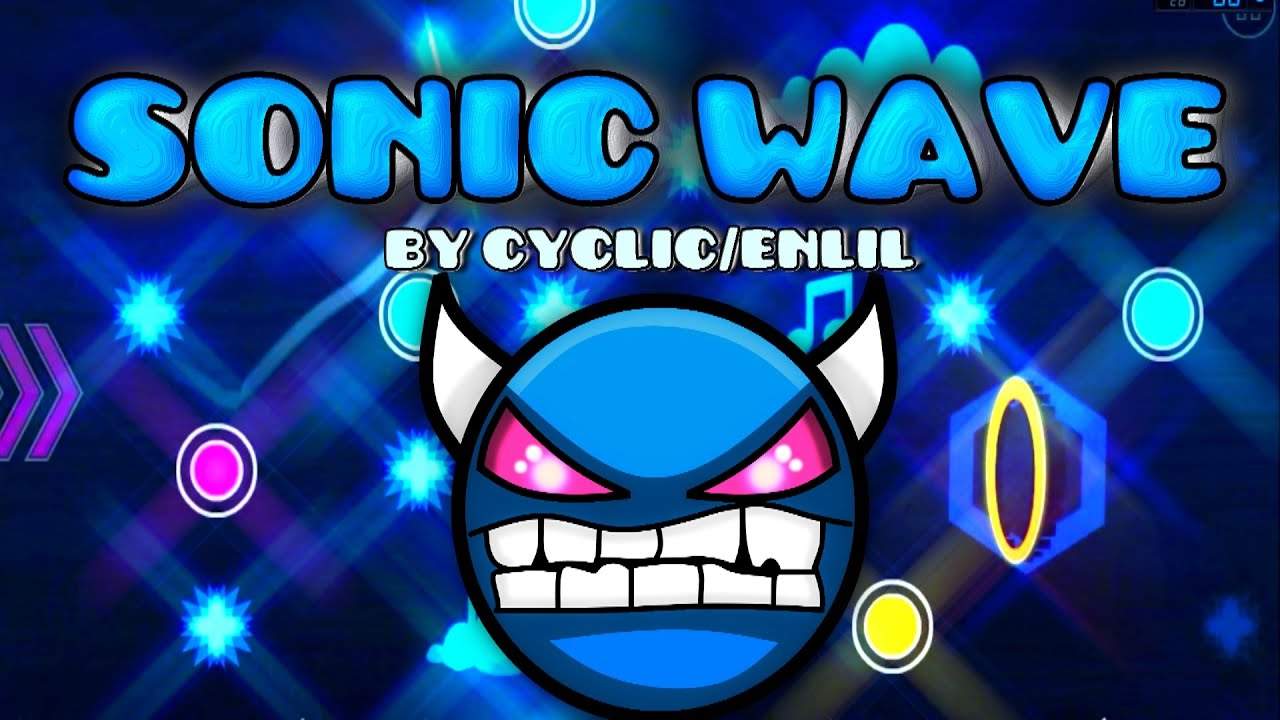
Nine Circles became a reference point for a broad family of levels that combine a wave-focused difficulty spike, triangular corridor language, strong red or high-contrast decoration, and a music-drop transition. The Geometry Dash Wiki's lineage page connects names including Fairydust, The Realistic, Jawbreaker, Poltergeist, and Sonic Wave to that tradition. Those relationships are historical and stylistic; they do not make the levels interchangeable. Sonic Wave is a separate entity with its own creator history, verification story, route, records, and changing ranking context. Link to the Sonic Wave guide when the reader wants that entity, but keep this page centered on Zobros's original Nine Circles. The same boundary applies to the Demonlist. A current list can answer a dated ranking question, while this guide answers stable identity, route, coin, and practice questions. No ‘current hardest Nine Circles level’ claim is frozen here because source snapshots can conflict and the answer can change.
Guide section 09
Build a complete-run routine after section practice
Section consistency is necessary but not sufficient for a complete run. Start a session with a short warm-up in the specific form that caused the previous repeated miss. Then make one route-reading pass from the opening through the ball, one practice pass that includes the pre-drop transition and wave, and one pass over the closing cube and coin decisions. Join the late route first so the ending is familiar, then extend the start point backward. During normal attempts, stop changing the plan after every death. Keep the same cue language for a small set of runs, review the repeated cause, and change only one instruction at a time. If the visual effect becomes uncomfortable or concentration drops, end the session. A clean training log records section, entry state, repeated error, and next correction; it does not need a fabricated success forecast. Completion belongs to the player and the game, not to telemetry that this reference page cannot read.
Visual reference
Nine Circles in pictures
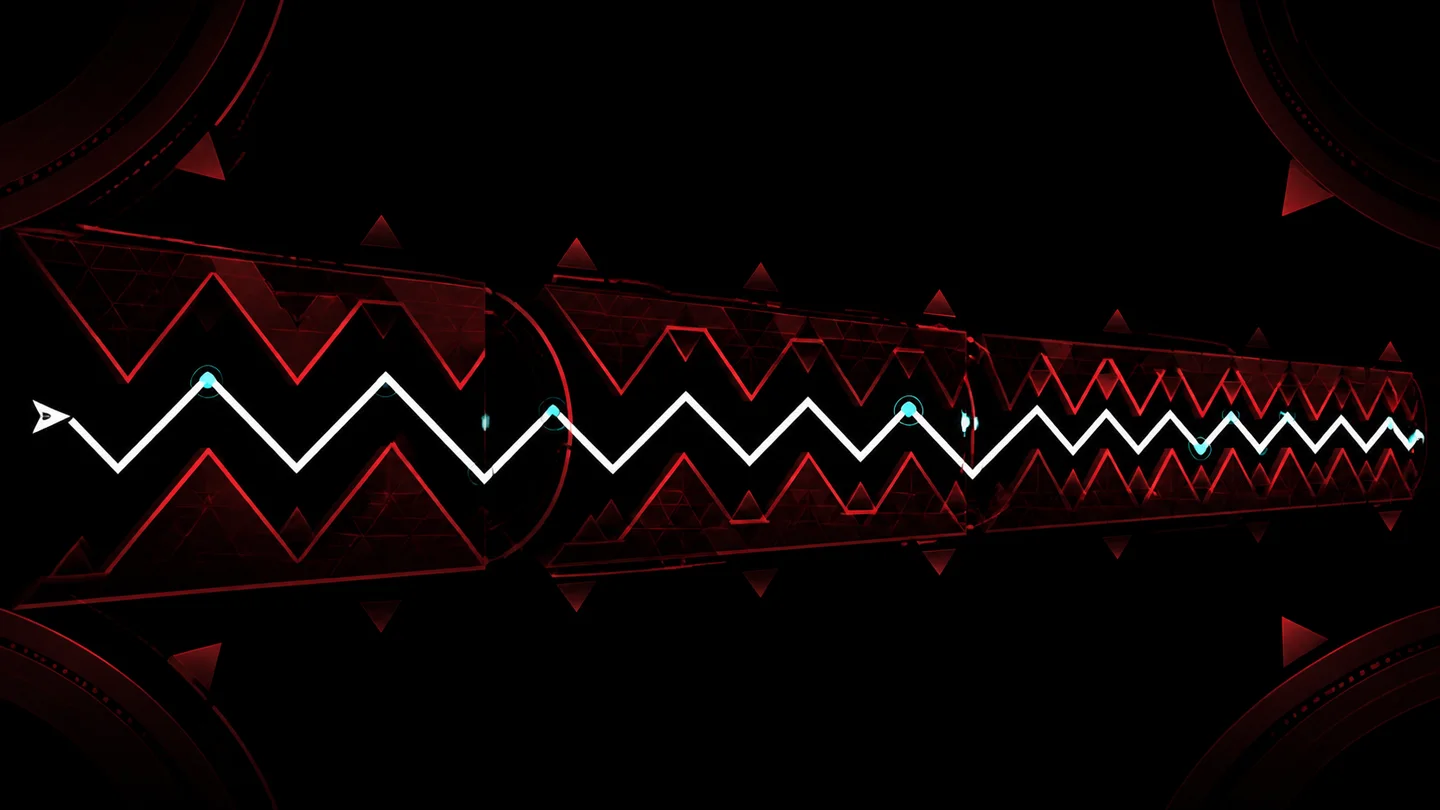
Original illustration
Original DashedUp training illustration: the three corridors represent a practice progression from broad reads to narrow control. It is not a gameplay screenshot and does not claim exact level geometry or percentages.
Media note: original illustrations are labelled as editorial orientation. Gameplay references require a retained source and attribution record before public release.
Route reference
Secret coin routes
01
Ball section · early route detour
User Coin 1
During the ball section, skip the documented yellow-orb line and land on the surface presented as fake spikes. Use the alternate path to collect the coin, then restore the expected gravity state before returning to the main route. Practise the landing and recovery as one sequence rather than treating the pickup as the finish.
Watch for: Fake cues are part of the section's memory test. Confirm the original level ID before copying a route from a video or practice upload.
02
Upside-down wave · alternate line
User Coin 2
Take the documented alternate route in the upside-down wave near the sawblade. The path uses controlled click-and-hold timing, then asks for a precise exit back toward the normal corridor. Isolate the return first so the detour does not leave the wave in an unfamiliar position.
Watch for: The route sits inside an already demanding visual section. Stop if the flashing effect causes discomfort, and do not treat a one-off survival as repeatable control.
03
Final cube · late-orb route
User Coin 3
In the final cube, use the edge of the penultimate pad and the documented late orb input to take the lower path beneath the Zobros name. The obstacle state changes as the coin route opens, so learn the final landing and finish before adding it to a full run.
Watch for: This is a late-run decision. Practise the ending independently so a successful wave does not arrive at an untested coin setup.
Practical checklist
How to practise Nine Circles
Confirm creator Zobros and level ID 4284013 before using a route, password, or showcase as evidence about the original.
Learn the first cue and the exit for every cube, ship, ball, and wave chapter before joining sections.
Classify each wave miss as an entry, correction, landmark, exit, or visual-load problem instead of repeating random inputs.
Reverse-chain the wave from its exit, then reconnect it from the pre-drop cube before testing longer runs.
Clear the normal line before adding the ball, upside-down wave, and final-cube coin detours one at a time.
End the session if flashing visuals cause discomfort; this guide's static artwork does not remove the level's photosensitivity risk.
Device note
Input feel can change with device, refresh rate, display latency, controls, fatigue, and the exact practice copy. This guide describes sourced route decisions and a repeatable diagnostic method; it does not claim universal frame-perfect timings, attempt totals, current records, or gameplay telemetry.
Questions players ask
Nine Circles FAQ
What is the Nine Circles level ID?
The original Nine Circles level by Zobros uses level ID 4284013. Check both the ID and creator before trusting a walkthrough or practice copy.
Who created Nine Circles in Geometry Dash?
Zobros created Nine Circles. That creator attribution is separate from the artists behind its song and from creators of later Nine Circles-style levels.
What difficulty is Nine Circles?
The checked source record classifies Nine Circles as a Hard Demon worth 10 stars. Difficulty labels can be rechecked before a material update, but the page does not turn them into an attempt forecast for an individual player.
What is the Nine Circles password?
The listed password is 121214. It is not the level ID, song ID, or an unverified start-position copy code.
What song does Nine Circles use?
Nine Circles uses the song Nine Circles by NIGHTkilla, also known as Rukkus. The listed music ID is 533927, while the level ID is 4284013.
How many user coins are in Nine Circles?
Nine Circles has three user coins: one through an alternate ball route, one in the upside-down wave route, and one through a late-orb route in the final cube.
How should I practise the Nine Circles wave?
Split the wave into short corridors, name the entry cue and repeated error, practise each exit, and connect stable segments gradually. Reverse-chain from the final wave exit before moving the checkpoint back toward the pre-drop cube.
Is Nine Circles the same level as Sonic Wave?
No. Sonic Wave is a separate level influenced by the Nine Circles style. It has its own entity facts, verification history, route, records, and ranking context.
Does Nine Circles have a photosensitivity warning?
Yes. Nine Circles is known for strobing and high-contrast visual effects. Players who are sensitive to flashing images should avoid it or follow appropriate medical guidance, and anyone who experiences discomfort should stop immediately.
Evidence trail
Sources and scope
Facts and route positions were checked against the linked references on 2026-09-01. This is an independent fan reference and does not claim that the exact community level is embedded in Geometry Dash Lite.
Keep exploring
More references and tools
Sonic Wave
Open the separate Sonic Wave entity guide for its creator history, verification context, route and records rather than mixing it with Nine Circles.
Open reference
Geometry Dash Level IDs
Use the wider identifier table when a search term could refer to a level ID, password, copy, or another upload.
Open referenceGeometry Dash Music
Review how song identifiers differ from level identifiers before using music ID 533927 as a level code.
Open referenceDemonlist
Use the live list owner for dated ranking questions; this guide intentionally avoids freezing a changing position.
Open referencePlay next
Practise in a playable game
Open a separate browser game to practise related movement. This recommendation does not claim that the exact level in this article is included.
Browse games