Level guide · checked 2026-09-04
Thinking Space II
Thinking Space II is a 2.1/2.2 Extreme Demon mega-collaboration. This guide keeps its level identity, music and verification history separate from the live Demonlist position, then turns the level's precision-heavy route into a practical practice plan.
Outline
Level reference
At a glance
| Fact | Reference |
|---|---|
| Level ID | 119544028 |
| Difficulty | Extreme Demon |
| Version | Created in 2.1 · last updated in 2.2 |
| Length | Long · about 1:10 |
| Song | Nuke Powder by MaelouX · Music ID 489111 |
| Creators | DrCuber and CairoX, with NineDice as co-host |
| Verifier | Zoink |
Guide section 01
What Thinking Space II is
Thinking Space II, often shortened to TS2, is a long Extreme Demon mega-collaboration with a space-themed presentation and a route built around precision. The page's job is not to duplicate a live ranking table. It is to answer the entity questions that autocomplete and keyword data surface: which level is meant, what ID and song identify it, who hosted and verified it, what the route asks the player to practise, and where current list status should be checked.
Guide section 02
Identity, ID and music
The source record lists level ID 119544028. It credits DrCuber and CairoX as hosts, NineDice as co-host, and uses Nuke Powder by MaelouX with music ID 489111. Keep the namespaces separate: a level ID finds the Geometry Dash level, while a music ID identifies its audio entry. The source page also records the level as created in 2.1 and last updated in 2.2, which is why this guide avoids treating an old version label as a complete current client description.
Guide section 03
Verification history versus current ranking
Zoink is credited as the verifier in the level reference. Historical placement and the current Demonlist position are separate facts: the level's position can change when a harder level is verified and rated. For a live rank, use the linked Pointercrate page and its date; this page does not freeze a top-one claim into the title or schema. That separation protects the level guide from turning a dated milestone into a false current statistic.
Guide section 04
Read the level as precision chapters
A long Extreme Demon run creates a different practice problem from a short isolated challenge. Divide it at visible mode, portal and visual-theme changes. Start by learning the first input after each transition, then the short sequence that follows it. Use the cosmic route as a memory map: entry state, first cue, correction, exit. The goal is not to copy a video click-for-click, but to know which state the next input belongs to.
Guide section 05
Why the ending deserves its own pass
The reference describes the later part of Thinking Space II as carrying much of the difficulty, echoing the original Thinking Space's reputation for a demanding end. Treat that as a practice priority, not as a universal percentage claim. Start at the late transition, stabilise the first cue, and reconnect one segment earlier. Then test whether the same read survives after a longer preceding run; this is where checkpoint knowledge becomes full-run consistency.
Guide section 06
Verification, victors and video language
Searchers ask who verified Thinking Space II, who has beaten it, whether it is rated, and how many people completed it. Those questions require different evidence: a verifier credit belongs to the level source, a current record belongs to Pointercrate, and a video can demonstrate a completion without being the ranking database. The page links those jobs separately and avoids turning a video title or an autocomplete phrase into a complete victors list.
Guide section 07
Frame-perfect and macro questions
Auto Progressive surfaces frame-perfect, macro, noclip, showcase and level-ID wording. These phrases reveal useful questions but not a safe claim that the page has a measured frame-perfect count or an approved macro. A responsible guide can explain how to isolate a precision transition and how to label a video, while refusing to distribute cheats or present a macro as proof of legitimate completion.
Guide section 08
How to compare it with other demons
Comparisons such as Thinking Space II versus Amethyst are time-sensitive and skill-dependent. A ranking answers one community-list question on one date; a player deciding what to practise needs a skill profile: sustained precision, transition reading, late-run endurance and familiarity with the level's visual language. Link to the Demonlist for the live category, then keep this page focused on the entity and its practice decisions.
Guide section 09
A maintenance rule for a moving entity
Recheck current position, records, verifier notes, video availability and source URLs before any material update. Keep stable identity fields in the fact table, but date anything that can change. Auto Progressive is retained as wording discovery and the Semrush/gap exports remain the quantitative evidence; neither is a substitute for a current primary or list source.
Visual reference
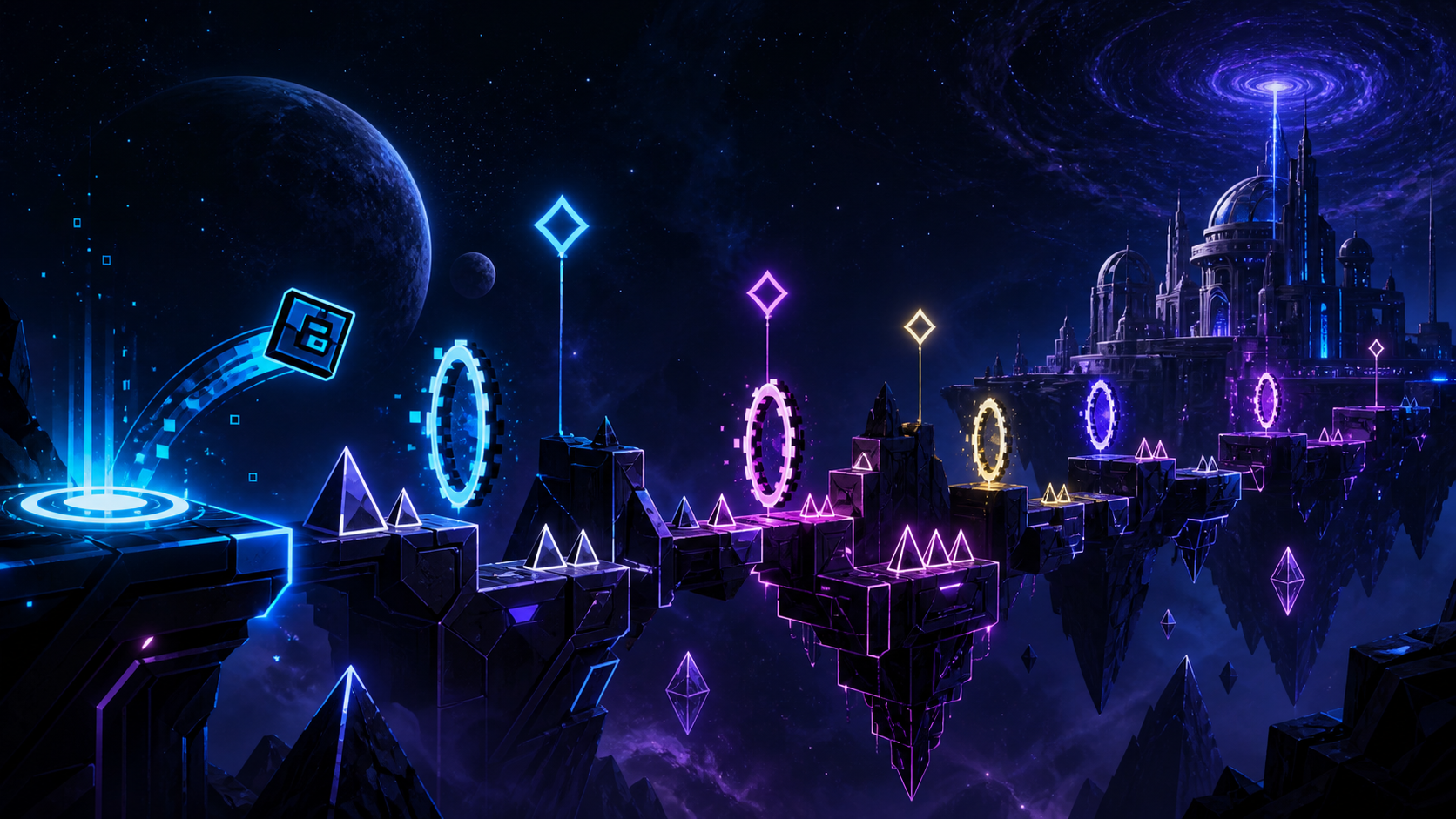
Thinking Space II in pictures
Original illustration
Original DashedUp editorial illustration for route orientation. It is not a captured gameplay screenshot and does not assert exact percentages, frame-perfects, or current rank.
Media note: original illustrations are labelled as editorial orientation. Gameplay references require a retained source and attribution record before public release.
Practical checklist
How to practise Thinking Space II
Learn the first input after each portal or mode change before linking full sections.
Give the late section its own practice pass, then reconnect one transition earlier.
Separate verifier, victor, record and ranking evidence instead of treating them as one claim.
Use a video for visual demonstration, not as a substitute for the live Demonlist record.
Avoid macro, noclip and download promises; describe legitimate practice cues instead.
Device note
Precision sections can feel different across devices and input setups. This guide gives a practice framework, not a universal frame-perfect count, refresh-rate threshold, or attempt forecast.
Questions players ask
Thinking Space II FAQ
What is the Thinking Space II level ID?
The source record lists 119544028 as the level ID. Use that number to distinguish the level from the original Thinking Space and unrelated searches.
What song does Thinking Space II use?
It uses Nuke Powder by MaelouX; the listed music ID is 489111. Keep that audio identifier separate from the level ID.
Who verified Thinking Space II?
Zoink is credited as the verifier in the level reference. A verifier credit is different from the current list position or a complete list of later victors.
Is Thinking Space II still number one?
A Demonlist position is time-sensitive. Check the linked live Pointercrate entry for the current position and date instead of relying on a frozen title or old video description.
How many people have beaten Thinking Space II?
The answer depends on the record source and its update date. Use the live list and its records rather than counting videos or autocomplete suggestions as an official total.
How many frame-perfects does Thinking Space II have?
This page does not publish an unverified frame-perfect count. It explains how to practise precision transitions without turning a community phrase or macro discussion into measured telemetry.
Can I play Thinking Space II online?
This route is a level reference. Use the DashedUp Geometry Dash Lite page for the available browser-play entry, and do not interpret it as an official web port or a downloadable copy of Thinking Space II.
Evidence trail
Sources and scope
Facts and route positions were checked against the linked references on 2026-09-04. This is an independent fan reference and does not claim that the exact community level is embedded in Geometry Dash Lite.
Keep exploring
More references and tools

Geometry Dash Level IDs
Use the general ID lookup rules.
Open referenceGeometry Dash Music
Check the difference between level and song IDs.
Open referenceDemonlist
Open the live ranking owner.
Open reference
Geometry Dash Lite
Open the available browser-play entry.
Open playable game
All Geometry Dash games
Browse the independent game and level catalog.
Open reference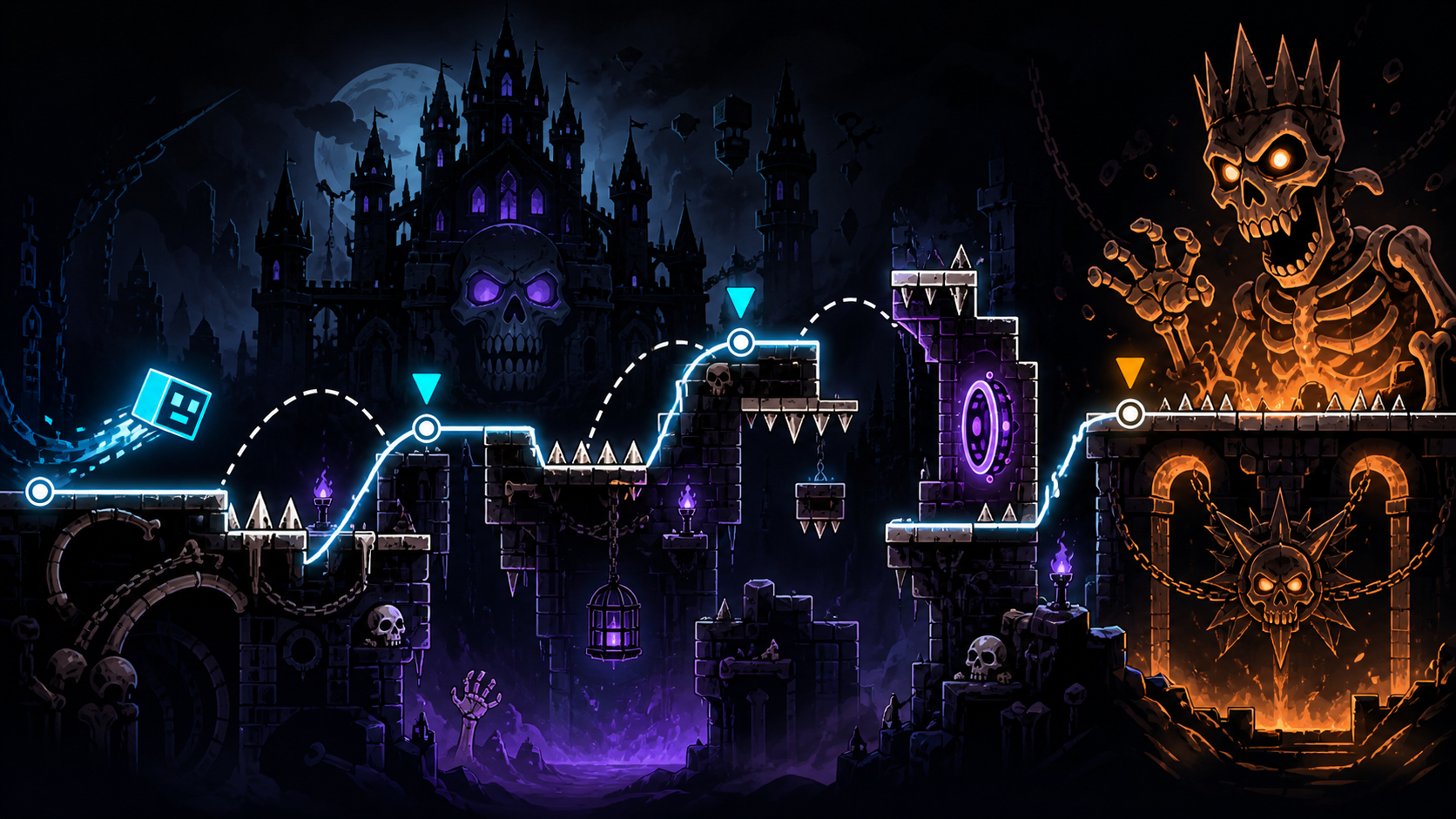
Skeletal Shenanigans
Read another entity-focused level reference.
Open referenceSociety
Open the current #1 entity reference and its dated source trail.
Open referencePlay next
Practise in a playable game
Open a separate browser game to practise related movement. This recommendation does not claim that the exact level in this article is included.
Browse games