Quick answer
The Nightmare and The Lightning Road are common first-Demon candidates, but neither is universally easiest. Choose the level whose main challenge matches the skill you are ready to practise.
Start with The Nightmare for a familiar legacy entry, The Lightning Road for route-reading, Platinum Adventure for broader transitions, Shiver for modern mixed-mode reading, or Speed Racer for speed-change consistency. This is a skill-fit route, not a permanent ranking.
Decision matrix
Pick by the skill you need
A legacy confidence route
The Nightmare
- Level ID
- 13519
- Creator
- Jax
Use it for: Simple route learning and calmer full runs
Watch for: Older visual language can still hide transitions
A route-reading lesson
The Lightning Road
- Level ID
- 55520
- Creator
- timeless real
Use it for: Memory cues, fake-path awareness, and mode changes
Watch for: Blind full runs are punished by the route
A broader transition check
Platinum Adventure
- Level ID
- 5904109
- Creator
- Omitted pending source reconciliation
Use it for: Varied modes and readable transitions
Watch for: The wider mode mix may feel less simple
A modern mixed-mode test
Shiver
- Level ID
- 56210242
- Creator
- SpKale
Use it for: Mode reading, later memory, and clean entries
Watch for: Frequent changes reward deliberate section splits
A controlled-speed route
Speed Racer
- Level ID
- 3543219
- Creator
- ZenthicAlpha
Use it for: Speed cues, transitions, and consistency
Watch for: Rushed inputs become obvious when the pace changes
Skill-fit planner
Choose the problem you want the first Demon to teach
Candidate
The Nightmare
Why it fits
Start here when you want simpler pacing and a confidence-focused full-run goal.
Watch: Older decoration can still make route changes less obvious.
This is a personal-skill chooser, not a universal easiest-Demon ranking or completion promise.
Method
Why “the easiest Demon” is subjective
Geometry Dash can label a level Easy Demon, but that label does not predict your personal result. Community votes summarize many opinions; they do not know whether you play on touch or keyboard, read older decoration comfortably, remember hidden routes well, or tense up during faster sections.
That is why this guide uses three checks instead of a fixed ranking. Readability asks whether you can explain the death. Repeatability asks whether you can pass the transition again after learning it. Transfer asks whether the level trains a skill you will use in the next level.
If a candidate fails all three checks, choosing another Easy Demon is not giving up. It is choosing a better practice problem. Difficulty labels are a useful shared vocabulary, while suitability remains personal and can change with device, input, update, and experience.
Readability
Can you name the cue or mechanic that caused the death?
Repeatability
Can you pass the transition again from a realistic entrance?
Transfer
Will this skill help with the next route you want to learn?
Five routes
What each candidate actually teaches
The Nightmare: a legacy confidence route
The Nightmare by Jax is an Easy Demon with level ID 13519. It is often recommended because its legacy structure feels less visually dense than many newer levels. That makes it a reasonable first test for a player who wants to learn Demon pacing without beginning with a highly decorated modern level.
Do not treat its reputation as a guarantee. Run the whole level once in Practice Mode, then note the first transition you cannot explain. Practise the entry to that transition and its exit as one unit. If the older visual language keeps hiding the route from you, The Lightning Road or a more modern candidate may be easier to read even if another list ranks it lower.
The Lightning Road: learn the route before chasing a clear
The Lightning Road by timeless real is an Easy Demon with level ID 55520. Its route moves through cube, ship, ball, and memory-based passages, and its reference page documents a fake secret-way trap. This makes it useful for a player who can control the basic modes but needs to stop relying on blind reaction.
Your first goal is not a percentage. It is a clean route map: know where the real path changes, where gravity or mode changes alter the input, and which visual cue starts the next section. Once you can name the cue that caused each death, connect two neighbouring sections. DashedUp’s The Lightning Road guide holds the level-specific walkthrough while this page remains the chooser.
Platinum Adventure: test a wider mode mix
Platinum Adventure is an Easy Demon with level ID 5904109. Its reference record describes a longer, multi-mode experience with three user coins. It is a useful candidate when a player wants something broader than one narrow mechanic and can already recognize mode changes without panicking.
Ignore the coins during the first learning pass. Learn the normal route first, then decide whether a collectible path helps or distracts from the clear. The creator label differs across current reference displays, so this preview omits that field rather than turning a conflict into a false certainty.
Shiver: practise modern mixed-mode reading
Shiver by SpKale is an Easy Demon with level ID 56210242. Its reference breakdown includes ship, UFO, wave, dual cube, ball, spider, and later memory. That variety makes it a better fit for a player who wants a modern mixed-mode check than for someone seeking the fewest possible transitions.
Split practice at mode changes. The useful question is not “How many times did I die?” but “Did I enter the next mode with the right speed, gravity, and position?” When a transition becomes repeatable, join it to the section before it. If every transition remains a surprise, return to a candidate with a narrower learning goal.
Speed Racer: control the pace instead of rushing it
Speed Racer by ZenthicAlpha is an Easy Demon with level ID 3543219. Its reference page highlights speed changes and memory alongside a mixed route. Choose it when your basic controls are stable and you want to practise keeping inputs deliberate while the pace changes.
In Practice Mode, mark the cue before each speed change. Start the practice segment before the cue, not after it, so you train the transition rather than only the obstacle. If faster sections make you mash inputs without reading the route, pause and shorten the segment until each click has a reason.
Practice system
A first-Demon route without magic numbers
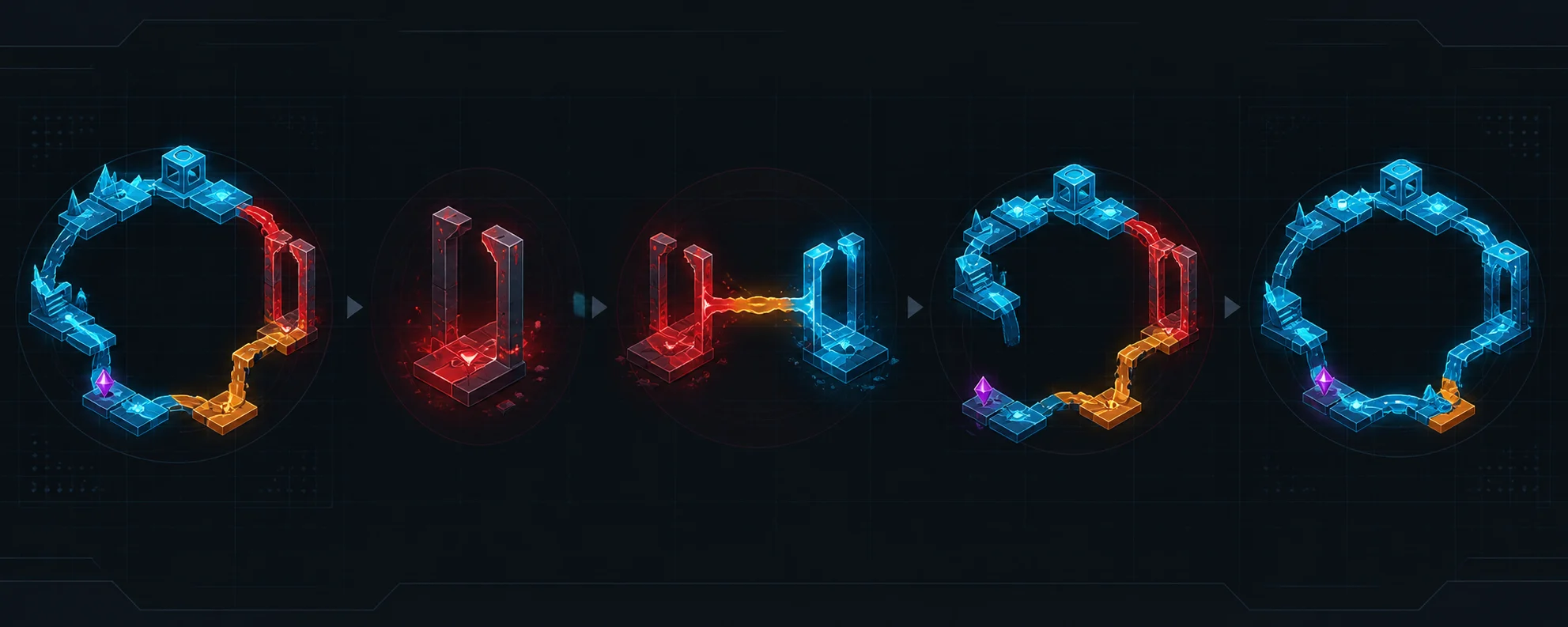
Map one complete practice pass
Finish a slow Practice Mode pass and name the mechanics or transitions that caused confusion. The goal is a usable route map, not a good percentage.
Diagnose the earliest unclear failure
Start with the first place where you cannot explain the death. Fixing an early unclear transition gives you more useful repetitions of everything after it.
Practise entrances and exits together
Begin before the transition and finish after the next stable landing. A section is not learned if it works only from a convenient checkpoint.
Connect longer segments
Join adjacent sections once both are repeatable. If the connection breaks, return to that transition rather than restarting the entire level.
Attempt full runs when the route is explainable
Move to full runs when surprises are rare and most deaths have a known cause. There is no universal attempt count or percentage threshold; consistency is the gate.
Readiness
Use official levels as signals, not admission tests
Official levels can reveal whether a basic mechanic needs attention before a community Demon. Electrodynamix can expose hurried inputs and pace changes, while Deadlocked can expose mixed-mode control. They are useful signals, not mandatory credentials: a player may find one official level harder than a particular Easy Demon because their skill profile is different.
If basic movement still feels unpredictable, practise a familiar official level or use the Geometry Dash Lite browser entry for general play. Do not assume that the five community candidates on this page are available inside the Lite embed; availability must be verified separately.
Progression
What to play after your first Demon
Choose another Easy Demon that trains a different bottleneck. A route-reading clear can be followed by a mixed-mode candidate; a speed-change clear can be followed by a memory-focused candidate. You do not need a fixed number of Easy Demons before exploring another tier, but you should be able to explain and repeat the skills that your next choice assumes.
If you meant the current hardest ranked levels rather than a beginner route, use the Geometry Dash Demonlist. It answers a different search job and should not be read as a first-Demon recommendation list.
If you want to check whether creator, verifier, and historical roles are clear, take the source-linked Geometry Dash Demon Quiz.
Keep the chosen route, best percentage, and next practice note together in the local Geometry Dash Progress Tracker.
Play next
Practise in a playable game
Open a separate browser game to practise related movement. This recommendation does not claim that the exact level in this article is included.
Browse games
Evidence trail
Method, checked date, and sources
Checked September 1, 2026. Level identity facts come from the linked reference records. Recommendations are DashedUp editorial guidance based on readability, repeatability, and skill transfer; they are not an official RobTop ranking, a Pointercrate ranking, or a guarantee of personal difficulty.
- Geometry Dash Wiki — User Levels
Difficulty and community-level reference context.
- Geometry Dash Wiki — The Nightmare
Identity and Easy Demon reference for The Nightmare.
- Geometry Dash Wiki — THE LIGHTNING ROAD
Identity, modes, and route notes for The Lightning Road.
- Geometry Dash Wiki — Platinum Adventure
Identity, coins, and mode reference; creator omitted here pending record reconciliation.
- Geometry Dash Wiki — Shiver
Identity and mixed-mode reference for Shiver.
- Geometry Dash Wiki — Speed Racer
Identity, speed-change, and memory reference for Speed Racer.
Player questions
Geometry Dash easiest Demons FAQ
What is the easiest Demon in Geometry Dash?
There is no universal easiest Demon. The Nightmare and The Lightning Road are common first-Demon candidates, but the better choice depends on whether you find legacy visuals, memory routes, transitions, or faster inputs easier to learn.
What are good Easy Demons for a first clear?
Start by comparing The Nightmare, The Lightning Road, Platinum Adventure, Shiver, and Speed Racer. Choose by the mechanic you want to practise, not by a fixed ranking copied from another player's experience.
Is The Nightmare easier than The Lightning Road?
Not for everyone. The Nightmare can suit players who want a legacy confidence route; The Lightning Road can suit players willing to learn route and memory cues. Test both briefly in Practice Mode and keep the one whose failures are easier to understand.
What should I play after The Nightmare?
The Lightning Road is a useful next choice for route-reading. Platinum Adventure or Shiver can broaden mode transitions, while Speed Racer can test pace control. Pick the next missing skill rather than following a compulsory order.
How should I practise my first Demon?
Map one full Practice Mode pass, diagnose the earliest unclear failure, practise the entrance and exit together, connect longer segments, and move to full runs when the route feels explainable and repeatable.
How long will my first Demon take?
There is no reliable universal time or attempt promise. Experience, device, input, route memory, session length, and the chosen level can all change the result. Track which transitions have become repeatable instead.
Are these Demons playable on DashedUp?
This page is a selection guide. A named DashedUp route or browser embed should be treated as playable only when that route visibly provides a working game frame. This article does not imply that all five candidates are embedded.
Is the Demonlist the same as an Easy Demon list?
No. DashedUp's Demonlist is a reference for high-end ranked levels. This guide helps beginners choose a first or early Easy Demon and intentionally does not copy current hardest-level rankings.
Independent, source-aware, and deliberately non-absolute
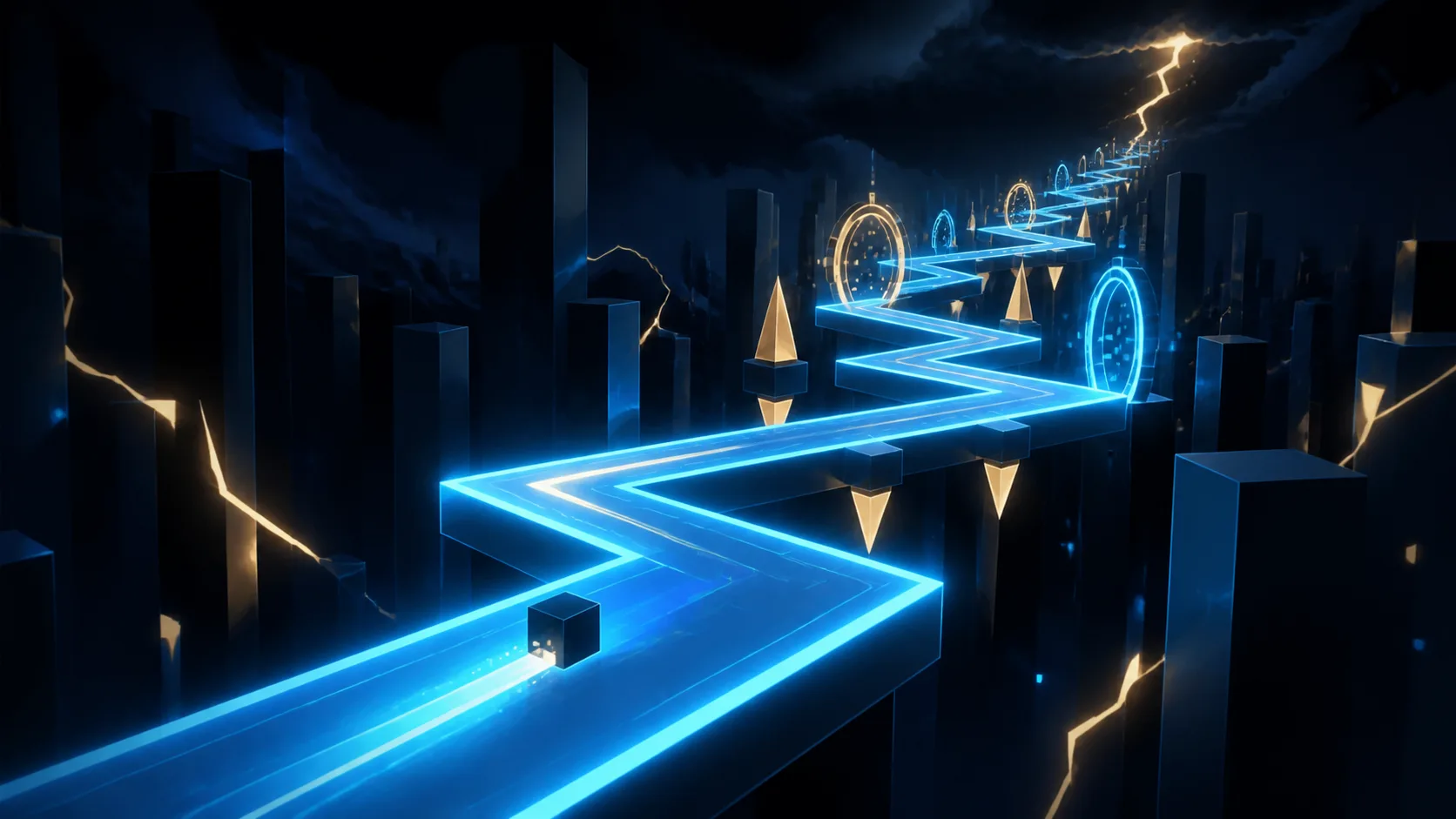
DashedUp is an independent fan site and is not affiliated with RobTop Games. Level names and creator credits belong to their respective owners. The two illustrations on this page are original AI-assisted editorial assets and do not reproduce gameplay, logos, or creator-owned art.