Level guide · checked 2026-08-05
Stereo Madness
Stereo Madness is the first main level in Geometry Dash. It teaches the cube, introduces the ship in two short flights, and uses three optional coin routes to reward players who can read an alternate line without losing the main rhythm.
Outline
Level reference
At a glance
| Fact | Reference |
|---|---|
| Level order | 1st main level |
| Difficulty | Easy |
| Reward | 1 star · 50 orbs |
| Forms | Cube · Ship |
| Secret coins | 3 |
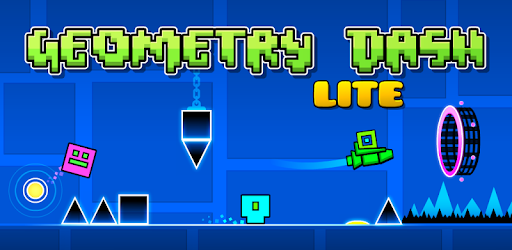
| Browser play | Geometry Dash Lite page |
Guide section 01
What Stereo Madness teaches
The level is an onboarding lesson disguised as a complete run. Most of the route is cube gameplay built from single spikes, short staircases, and predictable gaps. The first ship section changes the input problem: holding raises the ship and releasing lets it fall, so the goal is controlled altitude rather than a single timed jump. Treat each mode change as a new skill instead of carrying cube timing into the ship.
Guide section 02
A reliable first-clear plan
Make one run whose only objective is to survive the main route. Look one obstacle ahead, keep taps deliberate, and do not detour for a coin until the surrounding sequence is repeatable. When a miss repeats, restart that small pattern in Practice Mode if the playable build exposes it. The useful question is not how many attempts a first clear should take; it is which visual cue appeared before the missed input.
Guide section 03
The two ship sections
The official reference describes ship sequences in the early-middle and final portions of the level. In the first ship, use short corrections rather than holding continuously. In the final ship, leave attention for the alternate coin route: clear the main flight line first, then return for the narrow passage once the ending is familiar.
Guide section 04
Why the coin routes are worth learning
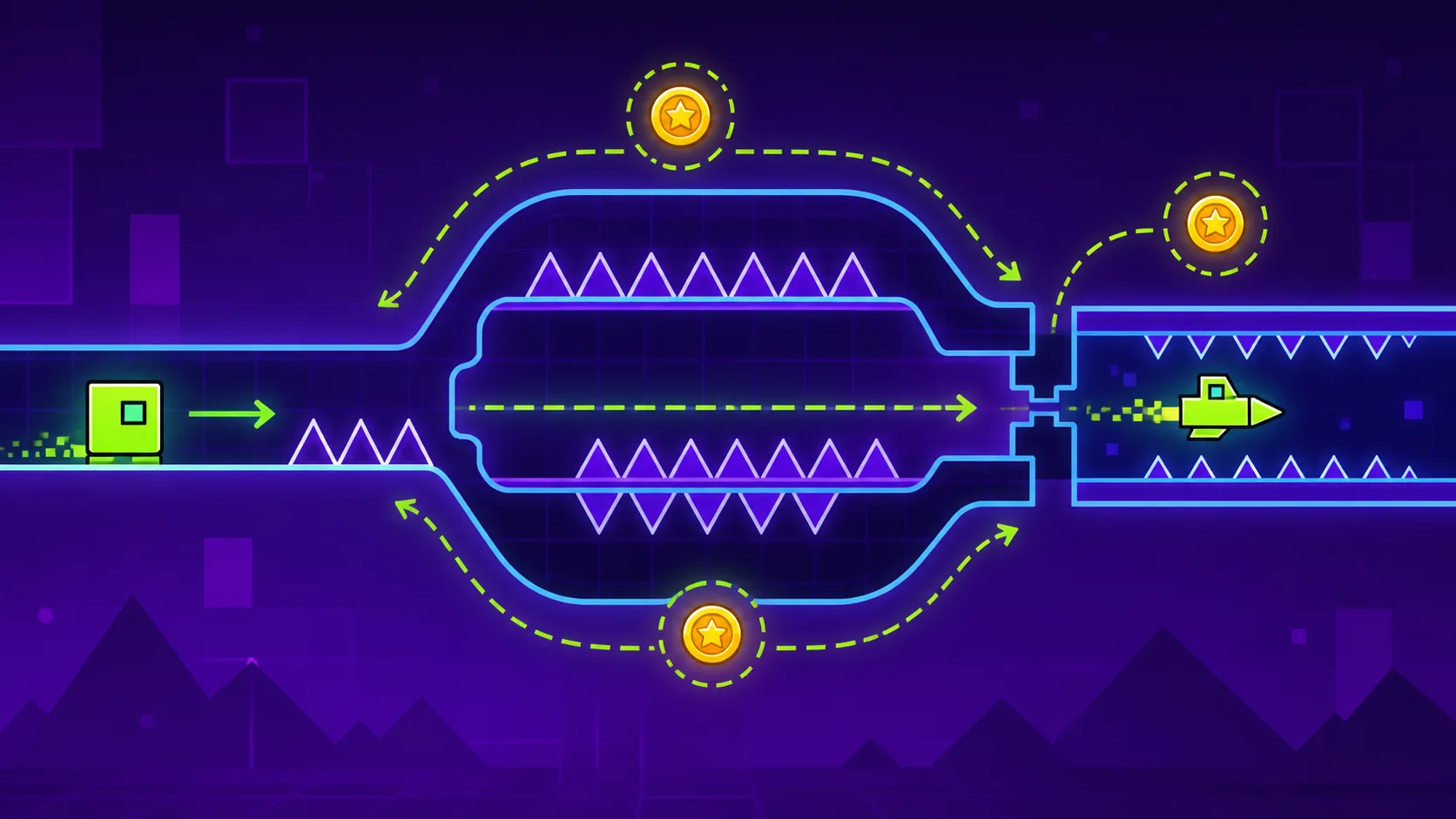
Secret coins are optional, but each one asks you to read a deliberate alternative rather than follow the safest line. Coin 1 tests a delayed cube route after the first ship, Coin 2 asks for a controlled staircase decision in the later cube section, and Coin 3 turns the final ship into a narrow-route exercise. Collect them one at a time instead of combining all three with a first-clear attempt.
Visual reference
Stereo Madness in pictures
Original illustration
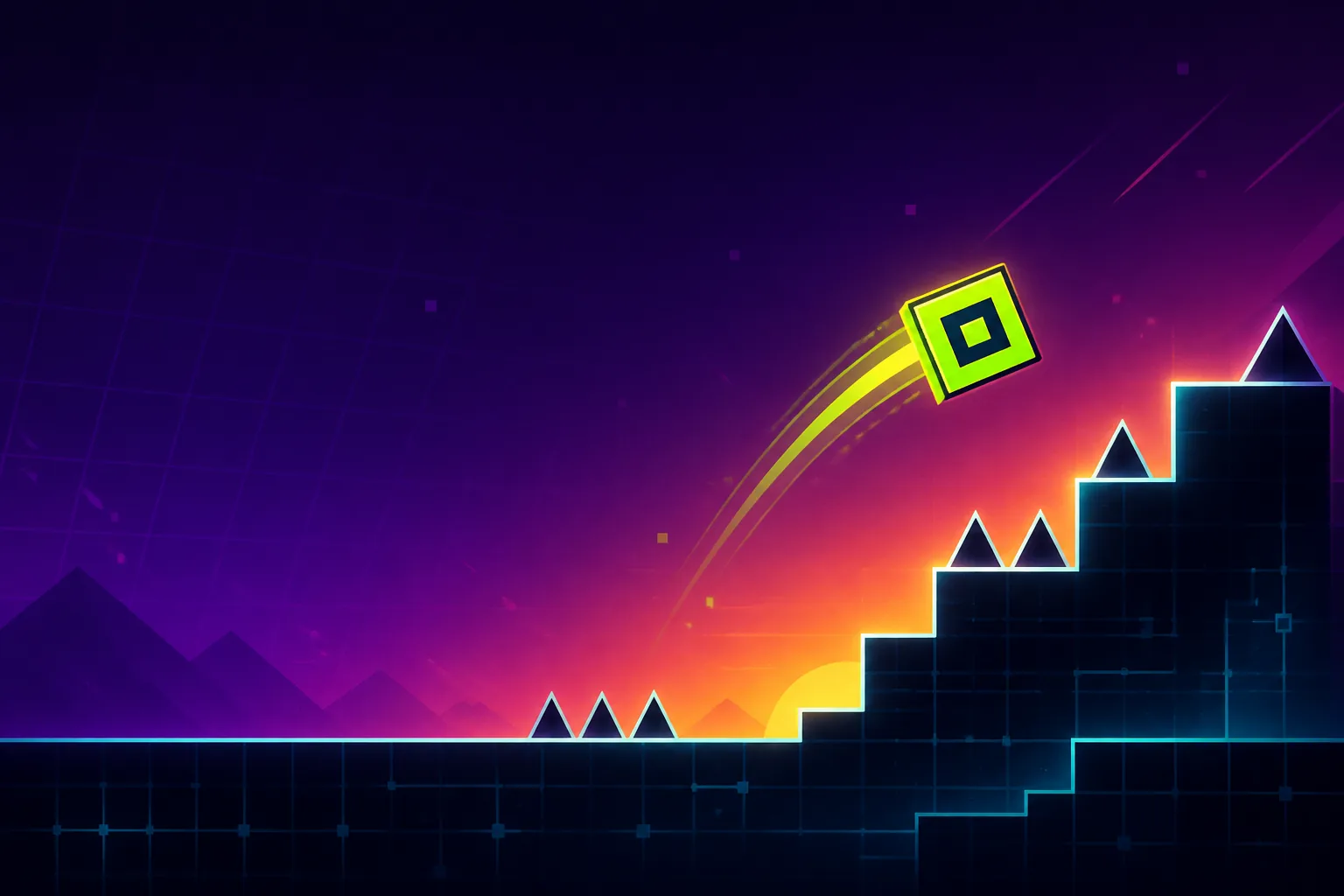
Original route illustration for orientation only; this is not a captured gameplay screenshot.
Original illustration
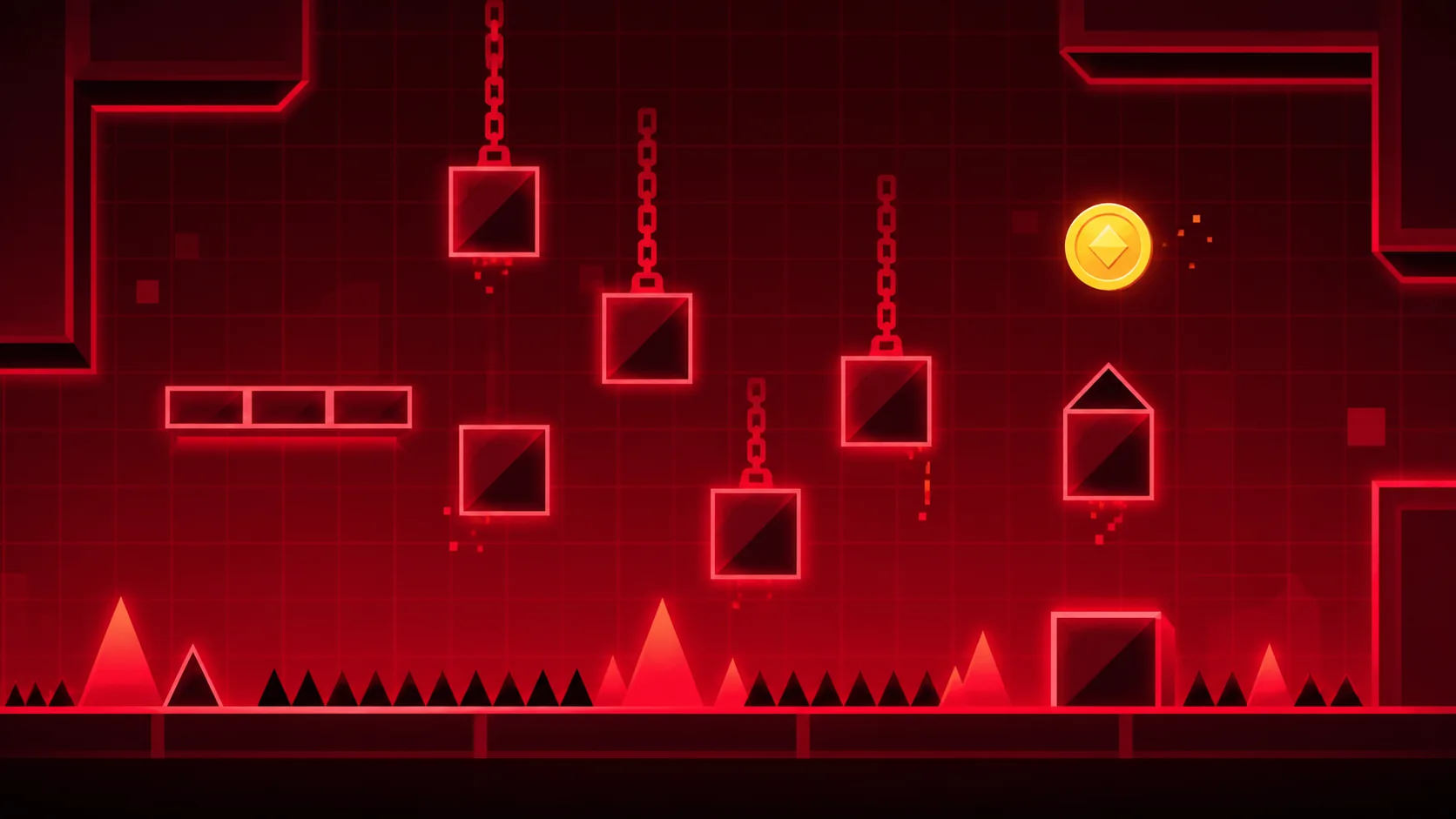
Original coin-route illustration for orientation only; use the written route cards for the source-backed positions.
Original illustration
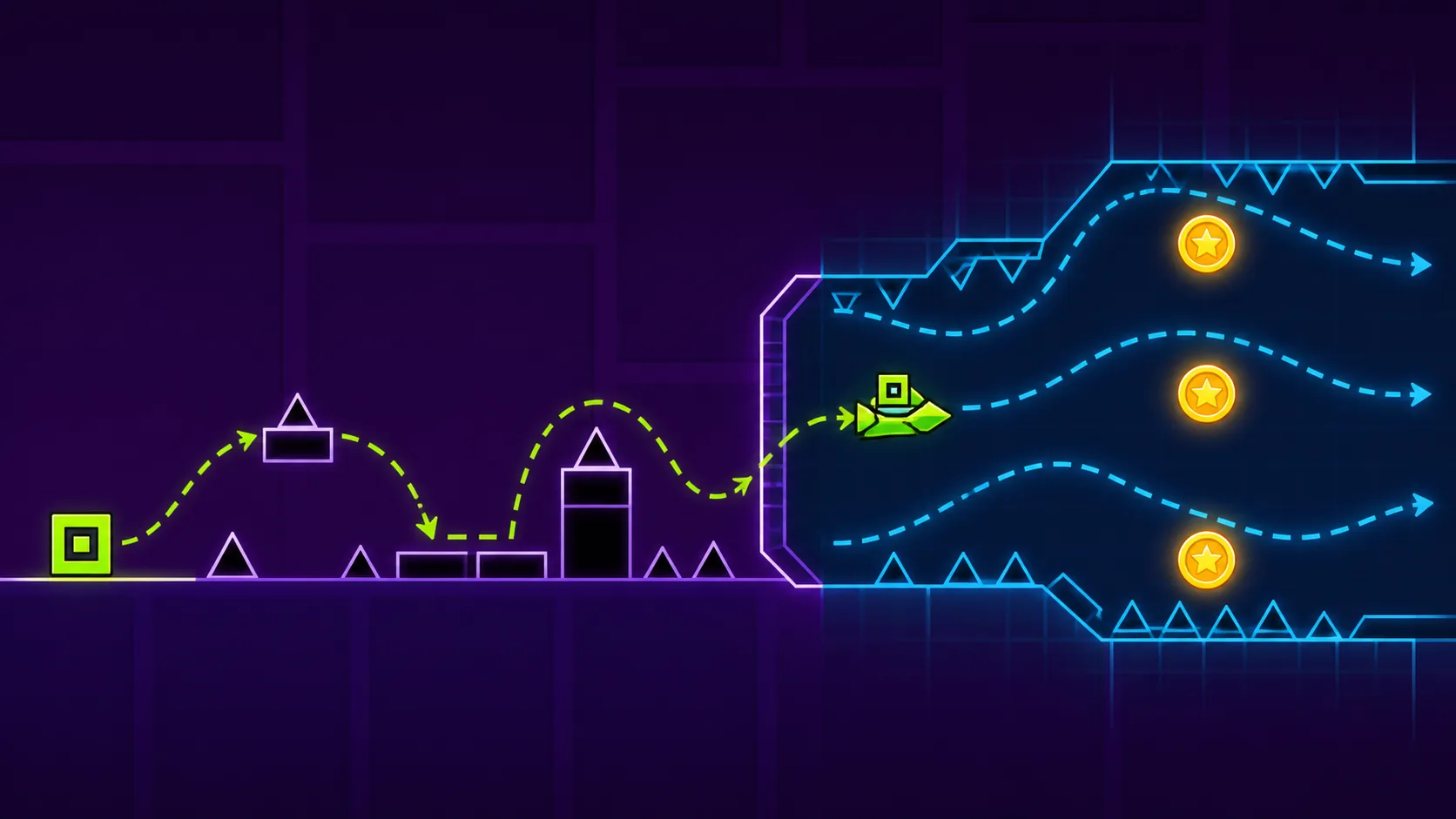
Original editorial illustration inspired by the level's rhythm-platformer layout; it is not a captured gameplay screenshot and does not assert a timestamp.
Original illustration
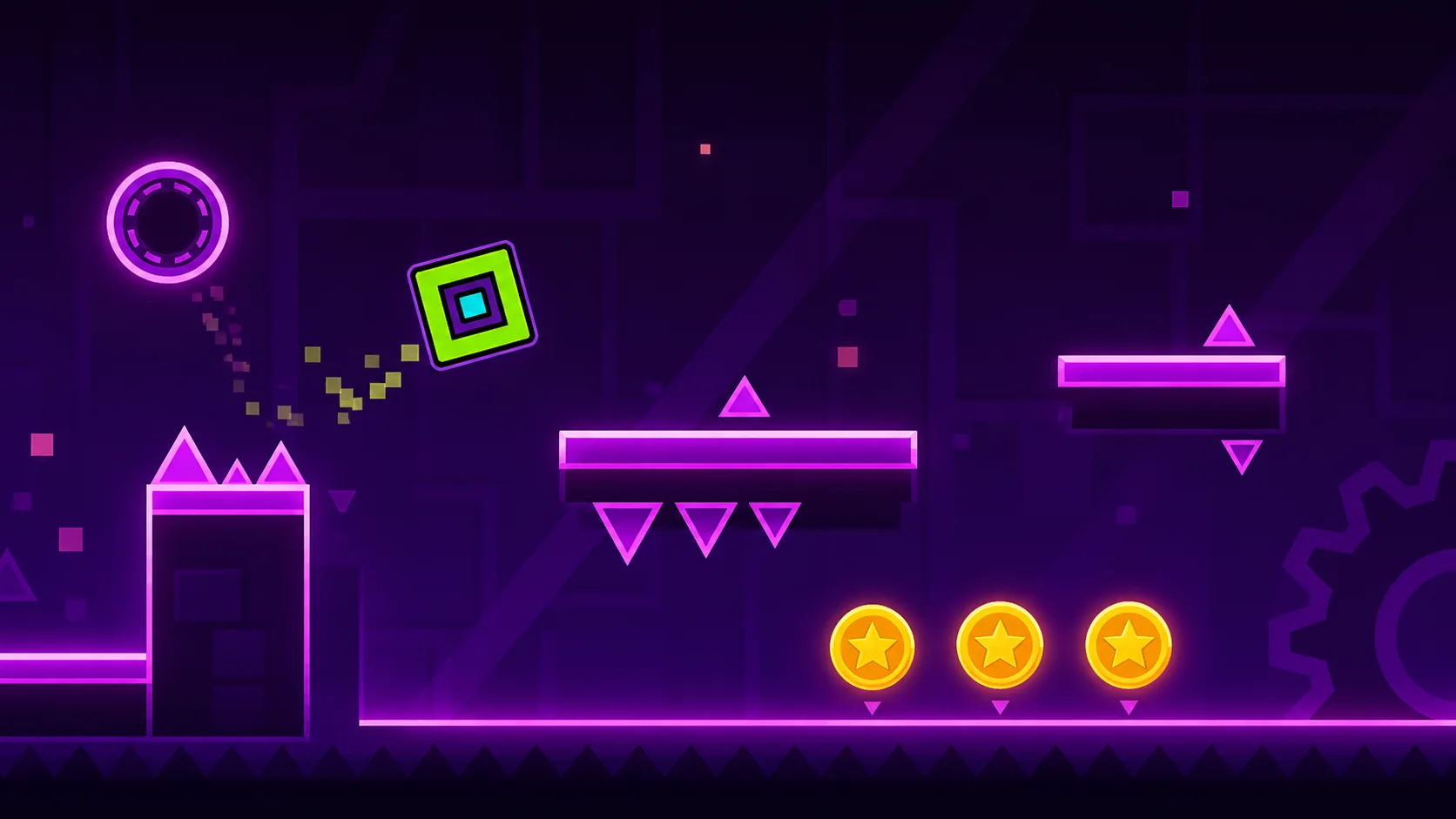
Original coin-route illustration for orientation only; use the written route cards for source-backed positions.
Media note: original illustrations are labelled as editorial orientation. Gameplay references require a retained source and attribution record before public release.
Route reference
Secret coin routes
01
Around 50% · cube
Secret Coin 1
After the first ship, climb the early columns instead of staying on the safest line. The documented route uses a short jump-and-gap pattern before returning to the main route.
Watch for: The entry and exit are one pattern. Do not commit to the highest-looking line without checking the landing gap.
02
Around 74% · cube
Secret Coin 2
After the narrow platforms, climb the descending block sequence and jump from the second-to-last block to reach the coin, then clear the short spike on the way back.
Watch for: Practise the return obstacle as part of the route; collecting the coin is not the end of the sequence.
03
Around 98% · ship
Secret Coin 3
In the final ship section, pass the first pair of obstacles and enter the small opening beside the ceiling obstacle. The alternate passage leads to the coin near the finish.
Watch for: This is a late-run route. Learn the final ship separately so a coin attempt does not erase confidence built in the first 90%.
Practical checklist
How to practise Stereo Madness
Clear the main route before adding coin detours.
Read the next obstacle before the cube reaches it and use short repeatable practice sections.
Treat the ship as a separate skill: small altitude corrections are easier to repeat than long holds.
Use the Geometry Dash Lite game panel when you are ready to play, then return here for a specific coin route.
Device note
Input timing can feel different on a phone, Chromebook, or desktop browser. This guide describes the route and cues; it does not claim a universal frame-perfect window or read attempts from the embedded game.
Questions players ask
Stereo Madness FAQ
What is Stereo Madness in Geometry Dash?
Stereo Madness is the first main level in Geometry Dash. It introduces basic cube jumps and the ship form, then adds three optional secret-coin routes.
Is Stereo Madness easy?
It is classified as an Easy level and is designed as an introduction, but a new player can still find the first ship and the final coin route demanding.
How many secret coins are in Stereo Madness?
There are three secret coins. The documented reference positions are approximately 50%, 74%, and 98%; use the route descriptions rather than treating the percentages as frame-perfect coordinates.
Where is the third Stereo Madness coin?
It is in the final ship section, inside a narrow alternate passage after the first pair of obstacles.
Can I play Stereo Madness online?
Use the Geometry Dash Lite game panel on DashedUp to play the available browser selection. This page is the reference layer, not a second game embed.
Is this the official Geometry Dash app?
No. DashedUp is an independent fan site. Check RobTop Games' current store listings for official app availability.
Evidence trail
Sources and scope
Facts and route positions were checked against the linked references on 2026-08-05. This is an independent fan reference and does not claim that the exact community level is embedded in Geometry Dash Lite.
Keep exploring
More references and tools

Nine Circles
Nine Circles is a Hard Demon created by Zobros. The original level uses ID 4284013, contains three user coins, and is best known for a fast wave section framed by the red-and-black visual language that later inspired a broad family of community levels. This guide separates stable identity facts from practice advice, maps the main route and all three coin detours, and explains the lineage without turning a changing list position into a permanent claim.
Open reference
Deadlocked
Deadlocked is the twentieth main level and a Demon-level milestone. It stacks wave, UFO, robot, teleportation and dual transitions into a run where learning the next cue matters more than reacting to the last obstacle.
Open reference
XStep
XStep is the tenth main level and the first Insane-difficulty level. Its route alternates cube, ball and ship sections, then uses gravity pads and rings to turn a familiar jump into a timing-and-positioning problem.
Open referencePlay next
Practise in a playable game
Open a separate browser game to practise related movement. This recommendation does not claim that the exact level in this article is included.
Browse games